Are you okay?
Those were Alex Pretti’s last words before he was murdered by Department of Homeland Security agents in Minneapolis last month. He was an ICU nurse; he was helping a woman pepper sprayed by immigration officers. They shot him ten times. There were multiple witness videos. I saw them all.
And, no, I’m not okay. But I’m not supposed to be. If, like me, you’re struggling right now, know that your humanity is intact. Contrary to what right-wing Evangelicals would have you believe, empathy is not a sin. We need it to survive, and you should guard yours with your life.
You are not designed to process an endless stream of violence, hate and horror. You are not meant to carry the weight of the world. You are not built to watch someone die at 7:30 and go to class at 8.
This psychological warfare is not an accident. To quote Adam Serwer’s now-infamous phrase describing the Trump administration, “the cruelty is the point.” When you are broken down, exhausted, hopeless and checked out, you are right where they want you to be.
It’s nearly impossible to crawl out of this hole. Everywhere we go, it seems we are met with reminders of hate. On social media, which should be a place for sharing and connection, we become trapped in an infinite scroll that doesn’t end when we finally put our phone away.
You may have heard people say that it’s irresponsible for you to disengage. How dare you not keep up with the news? Don’t you want to be a good citizen? An informed voter? It’s a privilege to look away!
Perhaps this is true; to be able to disengage completely means that your life is not touched by the worst of this. Those in imminent danger can’t check out, because awareness is survival.
However, I think we’re in desperate need of a reframe. If we don’t care for ourselves, we can’t care for our communities. When it’s too much, look away – but instead of looking down, look around you. You might be surprised to find just what you need: a place to go when you need to decompress, a person to talk to who understands, a hidden gem with the best burrito you’ve ever had.
We have to find solace in the smallness. Tiny kindnesses at the grocery store. Geese crossing the road. Bad Bunny at the halftime show. Supportive words from your favorite professor. An accidental extra order of fries in the bag.
Taken together, these things are life. And life is larger than ICE. There are more of us than them.
Not very long ago – possibly in your lifetime, reader – ICE did not exist. You can read more about its history (and Alex Pretti, by the way) inside this issue. Like any country, before 9/11, we had an agency that handled immigration, customs and border issues. But the war on terror planted seeds of surveillance, profiling, militarization and violence, and we are suffering the consequences today.
If you’ve seen pictures of any of the thousands of anti-ICE protests in the last few months, you’ve probably seen the slogan “Abolish ICE.” But what does this really mean?
Because of this administration’s immense urgency and violence in its immigration policy – not to mention because of the phrase “illegal alien” – you might be under the impression that being an undocumented immigrant is a crime. In fact, it’s a civil infraction. Crimes, like murder, assault and theft, are considered offenses against society and can be punished with imprisonment; civil offenses are punished with damages, like financial compensation, or civil removal proceedings (deportation) in the case of undocumented immigration.
Only a small fraction of people detained by ICE under the Trump administration have been convicted of violent crimes, and many have no criminal record at all. Regardless of their background, each one deserves due process and dignity. In its current form, ICE is not furthering that goal; mostly, it’s just racking up a long list of human rights violations.
Americans are noticing this. Approval ratings for ICE and Trump’s immigration policy are declining, especially in the wake of recent civilian deaths; in recent opinion polling from Navigator Research, only 36% of the registered voters surveyed said their opinion of ICE was favorable, 54% disapproved of Trump’s handling of immigration and 47% supported abolishing ICE.
So, what would replace it? Part of the answer is in our own history, before ICE: it’s possible to have an immigration agency that respects due process, immigrant dignity and the public’s wishes. The other part of the answer is in our future: we cannot tolerate ICE.
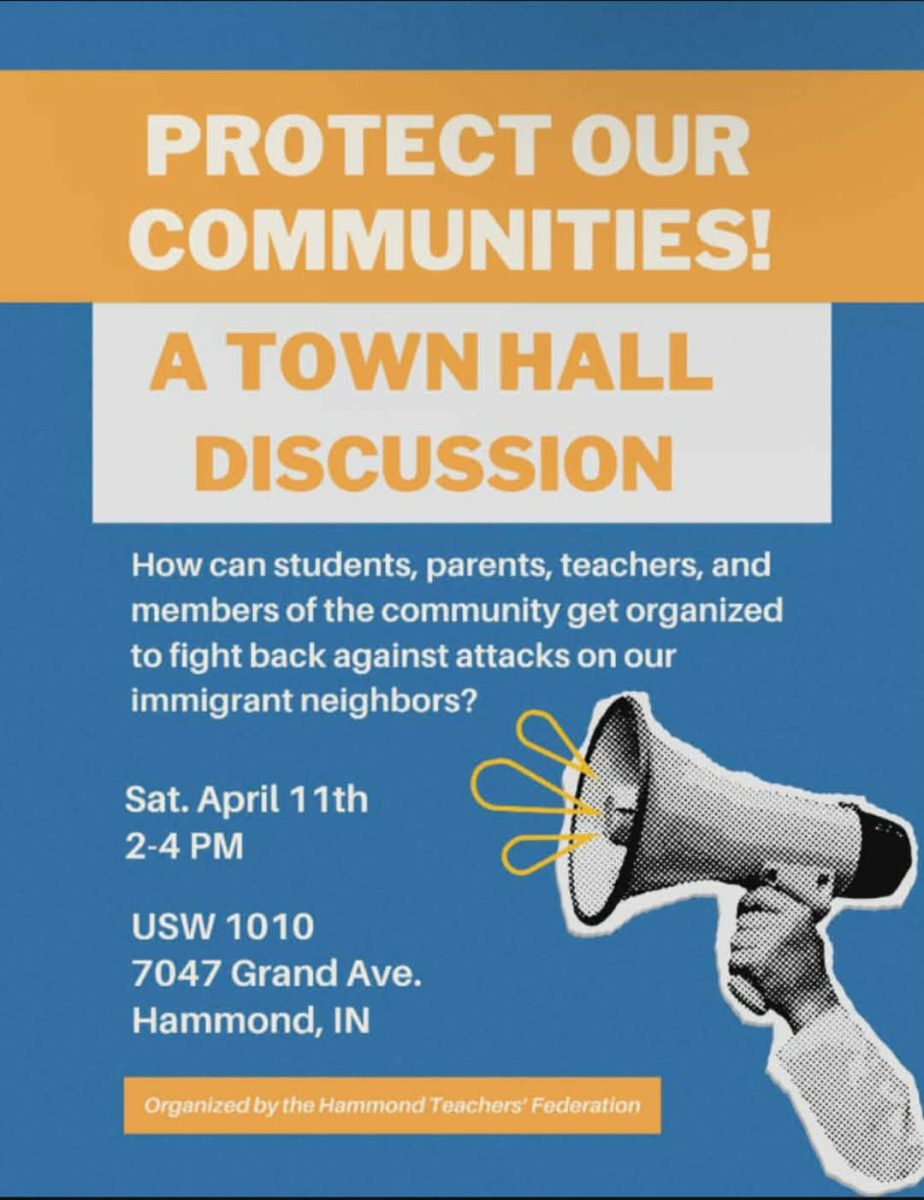
We must demand that our elected officials keep ICE out, and we must use our rights of assembly and redress to punish them when they fund ICE or fail to oppose it strongly enough. We must refuse to comply when ICE occupies our neighborhoods. We must engage in mutual aid to help and protect immigrants in our communities. We must witness, document and condemn injustice. We must love.
This is the good news: there was a time before ICE, and there will be a time after it. I believe that we will live to see it. In the meantime, we must see this: we must believe the evidence of our eyes and ears, and we must remember how the system failed our most vulnerable. To quote Omar El Akkad, “one day, everyone will have always been against this.” We must remember who was quiet when their voice was needed most.
Lately I can’t shake the feeling that our country is never going to be the same again – that there’s no “normal” to go back to. We’re exhausted, and we’re hurting. But one day, maybe, we will look back from a better place, knowing these were growing pains.